IF YOU RUN A HOME CARE OR HOME HEALTH AGENCY
You're already in
the home. Own what
happens between visits.
Your people see the pill bottles on the counter, the doses missed, the daughter's number on the fridge. Nobody is closer to the problem. Now there's a way to own it: medication support under your agency's name, reminders and refills, free from day one, with clinician oversight you can add when you want to charge for it.
30,000+ licensed agencies compete on the same service list. Differentiate and own your market.
Your agency's site.
Your agency's name.
This is the page a family reads while comparing three agencies. It sits on your domain, in your brand, and turns a visitor into a client you are texting tomorrow.
The days we are not there, we are still watching.
Every client we serve gets daily reminders and refills by text, at no extra cost. If something is missed, we know. If it keeps being missed, we call you.
Daily reminders
A text at the hour the dose is due. Nothing to download.
Refill support
We see what is running low before the bottle is empty.
Nurse oversight
A nurse reviews the full list monthly and calls you before a crisis.
Monthly family report
Plain language, forwardable to the rest of the family.
Start free today
Free, always. Reply STOP any time.
One script tag on your site. Your brand, your colors, your domain. You set every price; we suggest one in your dashboard.
Your aides can
remind. Now the
reminding never
stops.
Scope of practice draws a hard line: aides remind, they don't manage. Continere keeps you cleanly on the right side of it. The reminders are software, running around the clock under your brand, even on the days you're not scheduled. When something needs clinical judgment (a missed-dose pattern, a change after a hospital stay) a licensed clinician handles it, never your aide.
Reminders need no clinician at all. That layer is software and it runs from day one. When you want clinical judgment in the loop, put your own nurse in it, or ask about adding one from our network. That is what turns free reminders into a continuity program families will pay for.
Your service list already says "reminders and refills." This makes it true 24/7, documented, and impossible for the agency down the street to match.
The episode ends.
The medications
don't.
Medicare pays for the episode, then the episode ends, and the patient you stabilized goes back to managing eight medications alone. The next thing that happens too often is a readmission, credited to nobody and blamed on everybody.
Continere is the discharge that doesn't end: reminders and refills under your agency's name after the episode closes, missed-dose signals watched, and a clinician in the loop. Referral sources notice the agency whose patients stay out of the hospital, and the family remembers whose name was on the follow-through.
Where your patients qualify and your organization is credentialed, the clinical layer bills to Medicare (CCM/RPM) on top. The team maps this to your census on the launch call.
Whatever your state
calls you, this fits
Home Care Organization in Virginia, HCSSA in Texas, Home Care Registry in Pennsylvania. The license names never agreed, and it doesn't matter here: Continere attaches to your business model, not your statute.
Home care agencies
Personal care, companion care, ADL support. The largest segment, and the one whose "reminders and refills" line this makes real.
Home health (HHA)
Skilled nursing and therapy, episodic. Continuity after discharge is the gap this closes.
Multi-location brands
One brand account, locations underneath, every territory launching the same program under the flag.
Hospice & PACE
Separately licensed, same families. Talk to the team about fit before launch.
You staff eight hours.
The other 160 are
a black box.
Your aide is there Tuesday and Friday. Everything between those visits happens without you: the doses taken or skipped, the refill nobody picked up, the new prescription from the hospital that never got started. You find out at the fall, the ER visit, or the readmission. Always after. Always expensive.
This does not staff those hours. It makes them visible. Reminders go out under your name every day, and whether the household responds becomes something you can see on a Tuesday morning instead of learning about in a discharge summary.
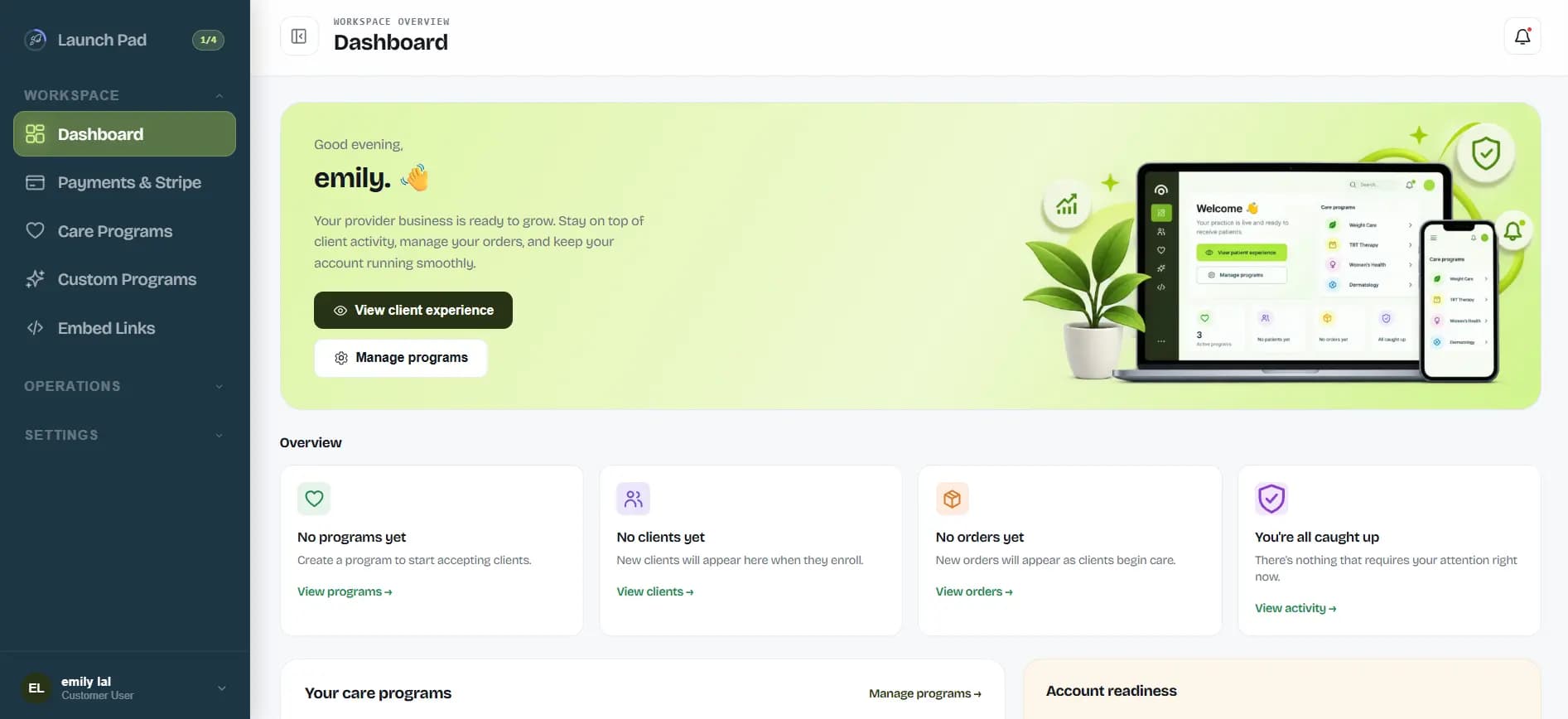
Illustrative view. Names and figures are examples.
What if the
family does
nothing?
Some will. A daughter who is overwhelmed, a spouse with their own health failing, a household that simply stops answering. No software fixes that, and any vendor who tells you otherwise is selling you a hope.
Silence is not the failure case here. It is the most useful thing the system produces. A household that goes quiet is a situation deteriorating, and you now know within days instead of at the next hospital discharge. That is early enough to send a nurse, call the case manager, document the need for more authorized hours, or escalate when something is genuinely wrong.
Straight about
what this does
The mechanics
Messages go out on schedule under your brand. Non-response triggers an alert inside a window you set. Every attempt, reply, and escalation is documented and exportable. You get a record of the unstaffed hours you have never had.
The outcome
That the pill gets swallowed. That readmissions drop by a specific number. Those depend on the household, and any vendor putting a percentage on them is guessing. Run it on your census, watch what happens, and hold us to what you see.
Turnover is a fact.
Losing the client
with it is a choice.
Three out of four caregivers leave in a given year. Nothing here changes that, and any vendor who tells you their software fixes turnover is selling you a hope. What changes is what a departure costs you.
75%
Median annual turnover at home care agencies in 2024
4 in 5
Of departures happen inside the first hundred days on the job
$2,600
Average cost to replace one caregiver, before a single hour is billed
45%
Client turnover, and the agencies who hold on are the ones who communicate
Put the continuity
in your system,
not in a person.
Right now the relationship lives inside the aide. She knows which pills go where, she knows the daughter's number, she knows that Tuesdays are hard. When she leaves, some of that leaves with her, and the family starts wondering whether the agency was ever the thing they trusted.
When medication support runs under your brand, the reminders keep arriving on the day she quits. The family keeps getting the same monthly picture. The medication history is documented and handed to whoever shows up next, so the new aide walks into a relationship that is already warm instead of starting from zero.
You will still lose caregivers. You should stop losing clients every time you do.
How many people near you
are on five or more meds?
Polypharmacy is the continuity care market. More than four in ten adults 65 and older take five or more prescriptions daily, and nearly one in five takes ten or more. Put your own census in, or your county's 65+ population, and see the size of it.
Method: 40% polypharmacy rate applied to the number entered, then continuity care at $97 per month. Sources: JAMA Internal Medicine (2024), NHANES 2017 to 2020. These are national rates applied to your number, not a local measurement or a revenue projection. The team models your actual census on the launch call.
The daughter already
pays you. Give her
one more reason.
Private-pay home care is bought by the family, not the client. That same family is the natural buyer of continuity care: a named clinician watching the medications between your visits, a monthly report she can forward to her brother, alerts before the crisis instead of after. You set the price; most agencies price it at $97/month per client on top of care hours.
And the free tier costs her nothing, which means every client on your census can be on it by Friday.
Differentiation compounds: in a market where every agency's brochure lists the same services at the same hourly rate, "a licensed clinician watches your mother's medications, under our name" is the sentence competitors can't say.